Not All Expiration Dates Are Created Equal: What Procurement Managers Need to Know About PPE Longevity
Walk into any industrial supply room or emergency response staging area, and you are likely to find at least one item that has been quietly aging on a shelf — perhaps a box of respirators, a sealed package of chemical-resistant gloves, or a hard hat purchased during a previous budget cycle. The instinct is often to discard anything past its printed date. But is that always the right call?
The answer, as with most things in safety management, is more nuanced than a simple yes or no. PPE shelf life is governed by a combination of material science, regulatory standards, manufacturer testing protocols, and storage conditions — and not all of these factors point in the same direction. Understanding how they interact is not just an academic exercise. For procurement managers overseeing large safety inventories, the difference between informed decision-making and reflexive disposal can translate into thousands of dollars annually.
What an Expiration Date Actually Represents
Most PPE manufacturers assign expiration or service-life dates based on internal testing conducted under controlled laboratory conditions. These dates reflect the point at which the manufacturer can no longer guarantee that the product will perform to its original certified standard. That is an important distinction: the date marks the boundary of the manufacturer's liability assurance, not necessarily the moment at which the product becomes physically non-functional.
For some categories of equipment, this distinction carries significant practical weight. For others, it matters very little — the product genuinely does degrade on or around that date, regardless of how well it has been stored.
Procurement managers who conflate these two realities risk making decisions that are either unnecessarily wasteful or, more dangerously, insufficiently cautious.
Equipment That Degrades Predictably Over Time
Certain categories of PPE are highly susceptible to time-related deterioration, and for these items, the printed expiration date should be treated as a hard boundary.
Respiratory protection is perhaps the clearest example. N95 respirators and other filtering facepiece respirators rely on electrostatic charge within the filter media to capture airborne particles. Over time — particularly when exposed to humidity, ozone, or temperature fluctuations — this charge dissipates, reducing filtration efficiency even when the mask appears physically intact. NIOSH and the CDC have both acknowledged that extended-use guidance issued during supply shortages is context-specific and not a general endorsement of using expired respiratory protection in normal operating conditions.
Chemical-resistant gloves present a similar challenge. Materials such as latex, nitrile, and neoprene undergo oxidative degradation over time, leading to micro-perforations and reduced tensile strength that are invisible to the naked eye. A glove that looks intact may no longer provide adequate barrier protection against the specific chemical hazards for which it was rated.
Fall protection harnesses made from nylon or polyester webbing are subject to UV degradation, moisture absorption, and stress fatigue. Most manufacturers recommend retirement within five years of the manufacture date, regardless of use frequency — a standard reinforced by OSHA's general duty requirements for fall protection equipment.
Equipment That Ages More Gracefully
Not every item in your safety inventory carries the same urgency for replacement. Several categories of PPE, when stored under appropriate conditions, can retain their functional integrity well beyond what a cursory glance at a date stamp might suggest.
Hard hats are a frequently misunderstood case. ANSI/ISEA Z89.1, the governing standard for industrial head protection in the United States, does not prescribe a universal expiration date. Most manufacturers recommend replacement every five years for the shell and every year for the suspension system, but these recommendations assume regular field use under varying environmental conditions. A hard hat stored in a climate-controlled environment, away from UV exposure and chemical contact, may retain its structural integrity considerably longer — though any hat that has sustained an impact should be retired immediately, regardless of age.
Safety glasses and face shields with polycarbonate lenses can remain optically and structurally sound for extended periods when stored away from heat, direct sunlight, and chemical vapors. The primary concern with aged eyewear is lens clarity, not structural failure — and visual inspection can often identify compromised units before they are placed in service.
Disposable coveralls and other non-woven protective garments, particularly those stored in sealed packaging in temperature-stable environments, frequently maintain their physical integrity well past nominal shelf-life recommendations. However, any garment rated for chemical or biological protection should be assessed against the specific hazard it is intended to mitigate before extended-use decisions are made.
The Role of Storage Conditions
Manufacturer-assigned shelf-life dates are almost always predicated on a set of assumed storage conditions — typically a cool, dry environment with limited UV exposure and stable temperature ranges. When those conditions are not met, degradation accelerates, and the printed date becomes optimistic rather than conservative.
Conversely, equipment stored in ideal conditions may remain viable longer than the date suggests. This is not a license to ignore manufacturer guidance, but it does underscore why storage environment is a critical variable in any honest shelf-life assessment.
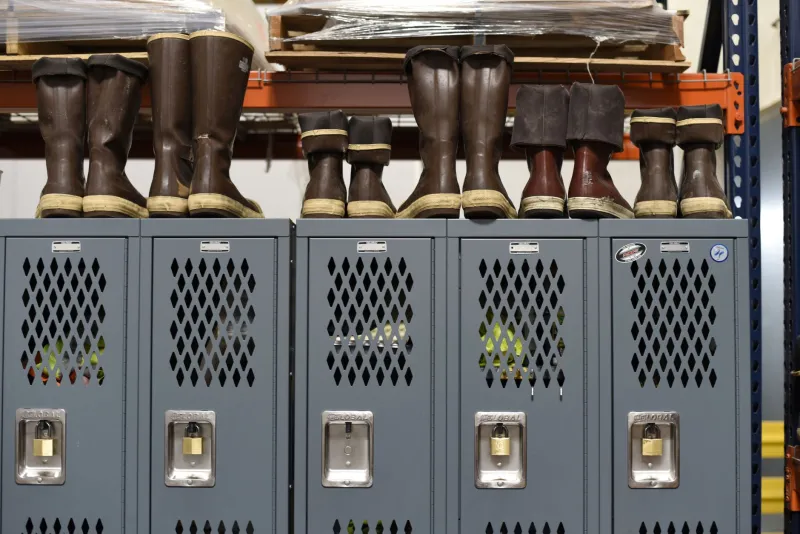
For industrial and emergency response organizations managing large inventories across multiple facilities, standardizing storage conditions is one of the most cost-effective investments available. Climate-controlled storage, proper shelving to prevent compression damage, and rotation protocols that prioritize older stock all extend the practical life of safety equipment without compromising compliance.
Regulatory Compliance Is Not Optional — But It Is Interpretable
OSHA does not maintain a single, unified standard governing PPE expiration across all equipment categories. Instead, compliance obligations are distributed across equipment-specific standards, manufacturer documentation requirements, and the general duty clause, which obligates employers to provide a workplace free from recognized hazards.
This regulatory architecture means that procurement managers must be familiar with the applicable standards for each category of equipment in their inventory — not just a single blanket rule. It also means that working with a knowledgeable supplier who can provide guidance on category-specific compliance requirements is not a luxury. It is a practical necessity.
Documentation matters here as well. Maintaining records of purchase dates, storage conditions, and inspection logs creates a defensible paper trail that demonstrates due diligence in the event of an incident investigation or regulatory audit.
Making Smarter Inventory Decisions
The goal is not to find reasons to keep aging equipment in service longer than is safe. The goal is to make informed, evidence-based decisions rather than reflexive ones driven by date stamps alone.
For procurement managers, this means developing a tiered assessment framework: equipment categories with hard expiration thresholds on one side, categories where storage conditions and inspection protocols can inform extended-use decisions on the other. It means working with suppliers who can provide clear documentation on manufacturer testing standards and storage recommendations. And it means building inventory rotation practices that reduce the likelihood of large quantities of equipment approaching expiration simultaneously — a scenario that creates both safety risk and budget pressure.
At First Call PPE, we work with procurement managers across industrial, healthcare, and emergency response sectors to build supply strategies that account for the full lifecycle of safety equipment — from initial specification through end-of-service decisions. Understanding what your inventory is actually doing while it sits on a shelf is part of that conversation.
Safety equipment is not a static asset. It is a dynamic one, subject to the same forces of time and environment that affect everything else in your operation. Managing it well requires knowledge, not just caution.