Assembled, Not Integrated: How Fragmented PPE Procurement Creates Invisible Gaps in Worker Protection
The Illusion of Coverage
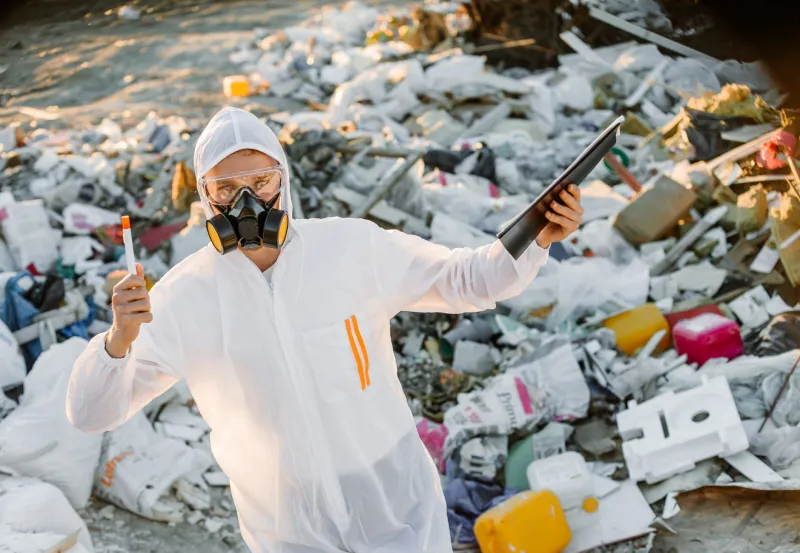
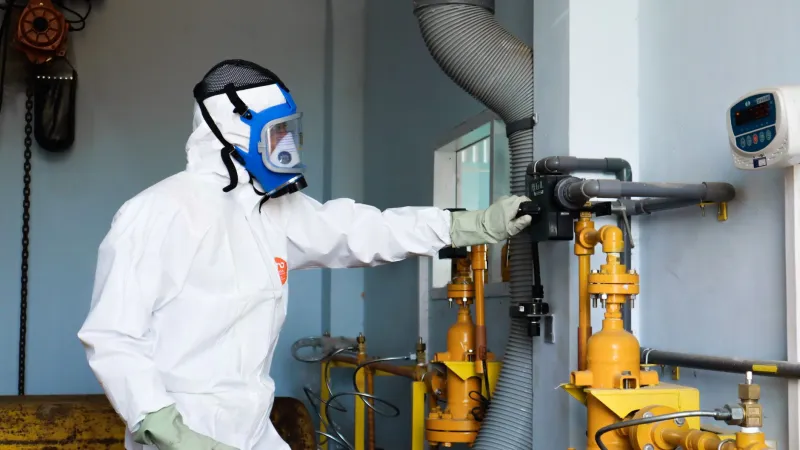
On paper, the safety program looks complete. Workers are issued respirators, gloves, protective eyewear, and chemical-resistant suits. Each item carries a certification mark. Each was purchased through a legitimate supplier. Yet during a routine industrial inspection—or worse, during an actual incident—it becomes apparent that the ensemble was never designed to function as a system. The gloves extend too far. The sleeve cuffs leave a gap. The respirator seal is compromised by the fit of the face shield. The protection that appeared comprehensive on a procurement spreadsheet simply does not exist in practice.
This scenario plays out across manufacturing floors, healthcare facilities, and emergency response staging areas with troubling regularity. The problem is not always counterfeit goods or negligent purchasing. Often, the failure stems from something more subtle: an organizational habit of treating PPE as a collection of independent items rather than as an integrated system of protection.
When Standards Diverge at the Seams
Personal protective equipment in the United States is governed by a layered framework of standards from bodies including OSHA, NIOSH, ANSI, and ASTM, among others. Each category of equipment—respiratory protection, chemical-resistant clothing, hand protection, eye and face protection—operates under its own set of testing protocols and performance benchmarks. The challenge arises when organizations source equipment across these categories from different manufacturers, each optimizing for compliance with their specific standard without accounting for how the product will interface with adjacent gear.
Consider a chemical splash scenario in an industrial processing facility. A worker is equipped with ANSI/ISEA 105-compliant gloves rated for chemical resistance and a coverall certified under ASTM F903 for liquid-tight performance. Both items are individually legitimate. However, the glove cuff length was engineered to interface with the sleeve design of a specific suit line from the same manufacturer. Paired with a competing brand's coverall, the cuff falls short of the wrist seal, creating an unprotected zone that no individual certification addresses. The hazard does not exist in either product's test documentation—it exists in the gap between them.
Respiratory protection presents its own version of this problem. NIOSH-approved respirators are tested as complete assemblies. When organizations replace manufacturer-supplied components—straps, exhalation valves, or filters—with third-party alternatives, the approval technically no longer applies to the assembled unit. OSHA's Respiratory Protection Standard (29 CFR 1910.134) requires that respirators be used in accordance with their certification. A respirator that has been modified through component substitution, even with well-intentioned cost-saving motives, may expose the organization to citation and, more critically, may fail to deliver the protection factor it was rated to provide.
The Procurement Logic That Leads Here
Understanding why fragmented PPE procurement happens is important for correcting it. In many organizations, purchasing decisions are distributed across departments, sites, or procurement cycles. A safety manager at one facility may select a preferred glove supplier, while a separate purchasing agent at another location sources coveralls based on price availability during a contract renewal. Over time, an organization accumulates a patchwork inventory that reflects dozens of independent decisions rather than a coherent protective strategy.
Budget pressure reinforces this tendency. When a supplier relationship lapses or a preferred product becomes backordered, procurement teams frequently substitute comparable-seeming alternatives without consulting the safety team. The substitute item may carry equivalent certifications on its own terms, yet its integration into an existing ensemble has never been evaluated. This is a structural gap in many procurement workflows—one that carries consequences that do not surface until a worker is harmed or a regulatory audit reveals the inconsistency.
Regulatory Exposure Beyond the Obvious
OSHA's PPE standards require that employers conduct hazard assessments and select equipment suited to the identified hazards. Critically, that obligation extends to the interaction of equipment components. An employer who can demonstrate that each item in a worker's ensemble was individually certified may still face citation if the combination fails to address the hazard the assessment identified. In legal terms, compliance is not demonstrated by a receipt—it is demonstrated by protection.
When incidents occur and litigation follows, plaintiff attorneys and OSHA investigators routinely examine procurement records, supplier certifications, and the compatibility documentation for assembled PPE systems. Organizations that cannot produce evidence that their ensemble selection was evaluated as a system—not just as individual components—find themselves at a significant disadvantage, regardless of the quality of the individual items involved.
The financial consequences compound quickly. Workers' compensation claims, OSHA penalties, third-party litigation, and reputational damage collectively dwarf the cost of a more deliberate procurement approach. Yet because these costs are downstream and often separated from the original purchasing decision by months or years, the connection is rarely made until the damage is done.
Vetting for Compatibility, Not Just Certification
Organizations that take PPE compatibility seriously approach supplier vetting differently. Rather than evaluating manufacturers in isolation, they ask suppliers to demonstrate how their products integrate with the broader ensemble. Reputable manufacturers frequently publish compatibility matrices or conduct joint testing with complementary product lines. Requesting this documentation during the procurement process is a reasonable and defensible practice.
For organizations managing complex hazard environments—confined space entry, hazardous materials response, or surgical settings—ensemble qualification testing, where the complete combination of PPE is evaluated against the specific hazard profile, represents a higher standard of diligence. Some suppliers will conduct or facilitate this testing on request. Those that cannot or will not should raise questions about their suitability as a long-term partner.
Consolidating PPE procurement through a smaller number of strategically selected suppliers also reduces compatibility risk. A supplier ecosystem built around manufacturers who design products to work together, or who explicitly document cross-brand compatibility, provides a more defensible foundation than a fragmented vendor list assembled opportunistically.
Building a System, Not a Collection
The distinction between a safety system and a collection of certified items is not semantic—it is operational and legal. Organizations that treat PPE procurement as a systems engineering challenge, evaluating how components interact under realistic use conditions, are building programs that hold up under pressure. Those that treat it as a line-item purchasing exercise are accumulating risk that may not become visible until the moment it matters most.
At First Call PPE, the principle that guides every supplier relationship and product recommendation is straightforward: safety equipment must function as designed when it is actually needed. That standard cannot be met by individual certifications alone. It requires deliberate attention to how equipment works together—and a procurement strategy disciplined enough to enforce that standard consistently, across every site, every category, and every contract cycle.