Disposal by Default: How Mismanaged PPE Waste Is Quietly Draining Your Safety Budget
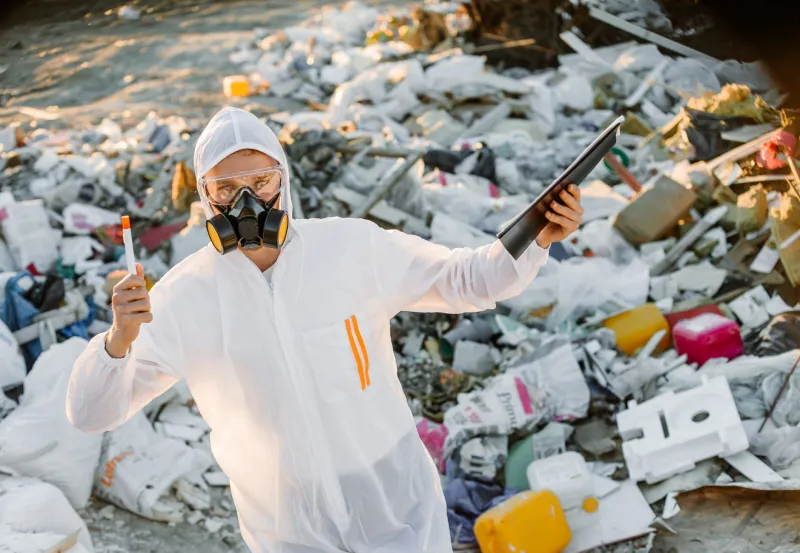
For most procurement and safety managers, the cost of personal protective equipment ends at the invoice. Equipment is ordered, distributed, and used—and when it's done, it disappears into a waste stream that few people think about until something goes wrong. That oversight is proving increasingly expensive.
The reality is that PPE disposal is not simply a housekeeping matter. It is a regulated, liability-laden process that carries financial, legal, and environmental consequences when handled carelessly. And in many organizations, it is being handled carelessly—not out of negligence, but out of a fundamental misunderstanding of what proper end-of-life management for safety equipment actually requires.
The Regulatory Landscape Most Operations Don't Know They're Operating In
The disposal of PPE—particularly medical-grade and hazardous materials equipment—falls under a patchwork of federal, state, and local regulations that many organizations are only dimly aware of. The Environmental Protection Agency classifies certain contaminated PPE as regulated medical waste or hazardous solid waste depending on its end use and the substances it has been exposed to. OSHA's Bloodborne Pathogens Standard (29 CFR 1910.1030) mandates specific handling and disposal procedures for PPE that has come into contact with potentially infectious materials. State environmental agencies frequently layer additional requirements on top of these federal baselines.
For industrial operations dealing with chemical exposure, the Resource Conservation and Recovery Act (RCRA) governs how PPE contaminated with hazardous substances must be categorized, stored, and discarded. Gloves, respirators, and coveralls exposed to certain solvents, heavy metals, or reactive compounds may qualify as hazardous waste—triggering manifest requirements, licensed hauler obligations, and documentation protocols that carry their own compliance burden.
Failure to comply is not a theoretical risk. EPA enforcement actions against facilities for improper disposal of contaminated PPE are a matter of public record. Fines can reach tens of thousands of dollars per violation per day, and in egregious cases, facility managers have faced personal liability.
The Financial Drain Hiding in Plain Sight
Beyond regulatory penalties, the financial impact of poor disposal practices manifests in ways that rarely appear as line items on a safety budget.
Expired inventory that is not systematically rotated and disposed of represents a direct loss of procurement investment. When organizations lack clear expiration tracking protocols, PPE often remains on shelves well past its certified service life—only to be discovered during an audit or, worse, distributed to workers who rely on it in good faith. The cost of replacing that inventory compounds the original procurement expense.
Contaminated equipment that is incorrectly disposed of through standard municipal waste channels can trigger environmental remediation obligations. In some cases, organizations have faced cleanup costs that dwarfed the original value of the discarded equipment many times over.
There is also the indirect cost of reputational exposure. A single incident involving improperly discarded medical PPE—whether discovered at a landfill, reported by a contractor, or surfaced during a regulatory inspection—can generate the kind of public and regulatory scrutiny that is difficult to recover from. For companies operating in healthcare, emergency response, or defense contracting, the reputational stakes are particularly acute.
Where the Waste Stream Goes Wrong
The disposal problem typically originates not in malicious intent but in organizational gaps. Safety managers are often focused on procurement and deployment; waste management is treated as a facilities or operations responsibility. Neither group has complete ownership, and the handoff between them is where compliance tends to break down.
Common failure points include:
- No formal expiration tracking system for stored PPE inventory, resulting in large volumes of expired equipment accumulating without visibility
- Inadequate staff training on how to categorize and segregate contaminated PPE from general waste
- Absence of a licensed medical or hazardous waste vendor relationship, leaving facilities to improvise disposal decisions under time pressure
- Inconsistent documentation, meaning that even when disposal is handled correctly, the organization cannot demonstrate compliance if audited
These are not exotic problems. They are routine gaps that exist across industrial facilities, healthcare systems, and emergency response organizations throughout the United States.
Forward-Thinking Disposal Strategies That Protect the Bottom Line
Organizations that have moved beyond reactive disposal management share several common practices worth examining.
Lifecycle costing at the procurement stage. Progressive safety managers are beginning to account for disposal costs when evaluating PPE options. Single-use equipment with a complex disposal requirement may carry a lower unit price than a reusable alternative, but when disposal is factored in, the economics often shift. Integrating end-of-life costs into procurement decisions leads to more accurate budgeting and better equipment selection.
Vendor take-back and disposal programs. Some PPE manufacturers and specialty distributors offer take-back programs for expired or contaminated equipment, either as a direct service or in partnership with licensed waste handlers. Engaging suppliers who offer this capability converts a compliance burden into a managed service, reducing internal administrative overhead and liability exposure.
Inventory rotation protocols tied to disposal triggers. Establishing formal first-in, first-out (FIFO) inventory management with automated expiration alerts prevents the accumulation of unusable stock. When expiration thresholds are reached, pre-established disposal procedures activate rather than leaving equipment in legal and operational limbo.
Pre-qualified waste management partnerships. Retaining a licensed medical or hazardous waste vendor before a disposal need arises—rather than scrambling when equipment must be discarded—ensures that proper procedures are followed consistently and that documentation is maintained from the point of collection through final disposal.
Staff training that covers the full PPE lifecycle. Safety training programs frequently emphasize proper donning and doffing procedures while giving disposal only cursory attention. Expanding training to include waste segregation, container labeling, and documentation requirements closes a gap that regulators frequently exploit during inspections.
Rethinking Where the Safety Budget Actually Ends
The instinct to measure PPE cost at the point of purchase is understandable—it is the most visible and controllable variable in the process. But it is also an incomplete picture that leaves organizations exposed to costs they did not plan for and liabilities they did not anticipate.
A mature approach to safety equipment management treats procurement and disposal as two phases of a single financial and compliance obligation. The organizations that have adopted this view tend to find that the savings generated by disciplined disposal management—through avoided penalties, reduced waste vendor costs, and better inventory utilization—more than offset the investment required to build the necessary systems.
At First Call PPE, we work with clients across industrial, medical, and emergency response sectors who are navigating exactly these challenges. Proper disposal is not a footnote to the safety equipment conversation. It is part of the same commitment to operational integrity that drives every procurement decision. Getting it right at both ends of the lifecycle is what separates organizations that merely purchase safety equipment from those that genuinely manage it.