Silent Degradation: How Aging Safety Inventory Can Fail You at the Worst Possible Moment

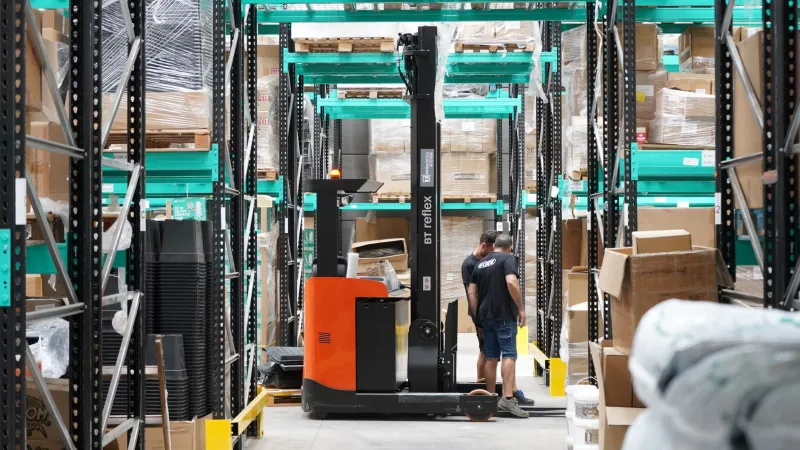
A warehouse shelf stocked with respirators, gloves, and protective eyewear can project an impression of preparedness. But preparedness is not merely about quantity. It is about whether the equipment on that shelf will actually perform as intended when a worker reaches for it during a chemical spill, a surge in patient volume, or an industrial emergency.
The uncomfortable reality for many procurement managers and safety officers is this: a significant portion of standing PPE inventory in US workplaces may already be degraded, expired, or compromised in ways that are invisible to the naked eye. The equipment looks fine. The packaging appears intact. But the material science underneath tells a different story.
Why PPE Has a Finite Useful Life
Personal protective equipment is manufactured from materials engineered to perform specific protective functions—and those materials are subject to the same physical and chemical forces that degrade everything else over time. Ultraviolet light, humidity, temperature fluctuation, and even atmospheric oxygen work continuously on elastomers, polymers, activated carbon, and filter media.
Nitrile and latex gloves, for example, are rated by most manufacturers for a shelf life of three to five years under proper storage conditions. Beyond that window, the polymer matrix begins to break down. Gloves may appear intact during a visual inspection but can fail under the mechanical stress of actual use—tearing during donning or developing micro-perforations that compromise barrier protection against bloodborne pathogens or chemical exposure.
Respirator cartridges present a different but equally serious concern. Activated carbon cartridges used for organic vapor protection begin adsorbing ambient contaminants the moment they are opened—and even sealed cartridges can lose effectiveness over time if storage conditions are not carefully controlled. Most manufacturers assign a sealed shelf life of three to five years, but that clock resets to a dramatically shorter window—often hours to days—once the packaging is opened. Organizations that maintain opened or partially used cartridges as part of their emergency reserves may unknowingly be storing equipment that offers little to no protection.
Elastic components in head harnesses, face seal materials in half-mask and full-face respirators, and foam padding in hard hat suspension systems are also vulnerable. Elastomers lose tensile strength and flexibility over time, which can compromise the fit of a respirator—rendering an otherwise functional facepiece incapable of forming the seal required to protect the wearer.
What the Regulations Actually Require
OSHA does not establish universal expiration standards for all categories of PPE, but the regulatory framework does impose obligations that implicitly require attention to product service life. Under 29 CFR 1910.134, employers are required to ensure that respirators are maintained in a condition that is clean, sanitary, and in good working order. The NIOSH approval held by a respirator applies to the device as manufactured and tested—not necessarily to a device that has aged beyond its design parameters.
Manufacturer guidance is the operative standard in most cases. OSHA's compliance framework generally treats manufacturer-specified maintenance and replacement intervals as the baseline, meaning that ignoring a manufacturer's stated shelf life is not merely an inventory management oversight—it may constitute a regulatory violation if an incident occurs.
For healthcare environments governed by FDA oversight, additional considerations apply to sterile and non-sterile PPE. Sterility assurance levels on packaging have defined limits, and using PPE beyond those dates in a clinical setting can create liability exposure that extends well beyond OSHA's jurisdiction.
The Storage Conditions Most Organizations Get Wrong
Even PPE that has not exceeded its labeled expiration date can degrade prematurely if storage conditions are inadequate. The most common failures are not exotic—they are mundane and entirely preventable.
Temperature extremes are a primary culprit. Equipment stored in facilities that experience significant seasonal temperature swings—uninsulated warehouses, vehicle trunks, outdoor storage containers—is subject to thermal cycling that accelerates polymer degradation. Most manufacturers specify storage temperatures in the range of 50 to 77 degrees Fahrenheit, with relative humidity controls in the 40 to 60 percent range.
Exposure to ozone is another frequently overlooked factor. Electrical motors, fluorescent lighting, and certain industrial equipment generate ozone, which is highly reactive with rubber and elastomer compounds. Storage areas near these sources can substantially shorten the effective life of respirator face seals and elastic harnesses.
Direct sunlight and fluorescent UV exposure degrade packaging integrity and the materials within. Gloves stored in clear bins near windows, or respirators left in open trays under shop lighting, are quietly losing service life with every passing week.
Conducting a Meaningful Inventory Audit
For organizations that have not recently reviewed their PPE inventory through the lens of expiration and condition, a structured audit is the appropriate starting point. The process does not require specialized laboratory equipment—but it does require discipline and a willingness to act on what the audit reveals.
Begin by cataloging every category of PPE in storage, including lot numbers, manufacture dates, and any printed expiration dates. Cross-reference these against manufacturer guidance for shelf life under your specific storage conditions. Items that cannot be dated—because packaging has been discarded or markings are illegible—should be treated as suspect and evaluated conservatively.
Conduct a physical inspection of a sample from each lot. For gloves, this means donning a sample and assessing elasticity, surface integrity, and resistance to tearing. For respirators, it means examining the face seal material for cracking, the harness for loss of elasticity, and the inhalation and exhalation valves for deformation or stiffness. Cartridges should be evaluated against their seal dates and storage history.
Document findings systematically. An audit that produces no written record provides no defensible evidence of due diligence and offers no baseline for future comparison.
Implementing a Rotation Protocol That Actually Works
The most durable solution to the shelf life problem is not periodic auditing alone—it is the implementation of a first-in, first-out (FIFO) rotation system that ensures older inventory is consumed before newer stock accumulates around it. This is standard practice in pharmaceutical and food supply chain management, but it is underutilized in PPE procurement despite being equally applicable.
For organizations that maintain substantial emergency reserves, rotation can be integrated into routine operations. Stock from emergency reserves can be cycled into active use before expiration, with fresh inventory replenishing the reserve position. This approach keeps emergency stock current without requiring wholesale disposal of viable equipment.
Procurement schedules should be calibrated to consumption rates and shelf life constraints, not simply to price breaks or contract minimums. Purchasing three years of glove supply at a favorable unit cost is not advantageous if the final year of that supply degrades before it can be used.
The Operational and Financial Cost of Getting This Wrong
The consequences of maintaining expired or degraded PPE inventory are not hypothetical. Workers who rely on compromised equipment face genuine physical risk. Organizations that discover their emergency reserves are non-viable during an actual emergency face operational disruption at precisely the moment when disruption is most costly.
From a liability standpoint, the use of expired PPE—particularly if that use is documented in incident records—can significantly complicate workers' compensation claims, OSHA investigations, and civil litigation. The cost of proactive inventory management is, in virtually every scenario, substantially lower than the cost of the alternative.
At First Call PPE, our role is not simply to supply equipment—it is to support the procurement decisions and operational practices that ensure that equipment performs when it is needed. That begins with understanding that a stocked shelf and a ready shelf are not the same thing.