When Equipment Doesn't Arrive: How Procurement Lead Times Have Become a Frontline Business Risk
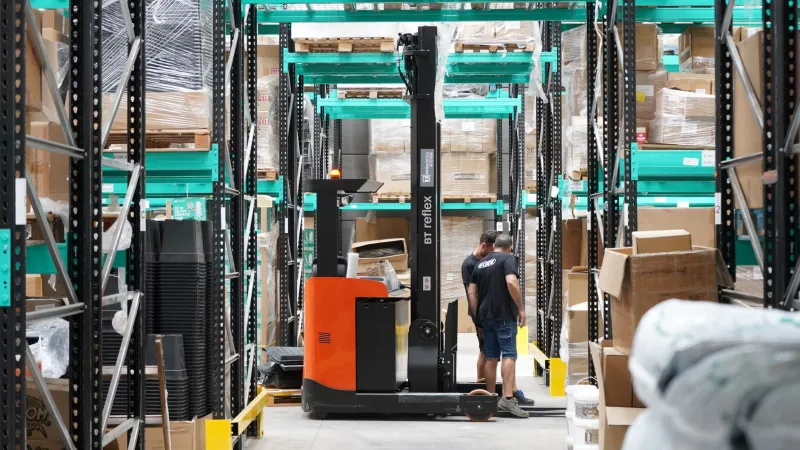
There was a time when ordering personal protective equipment was largely a routine administrative function. A facility manager would identify a need, submit a purchase order, and expect delivery within a predictable window. That era has passed. For procurement officers, EHS directors, and operations leaders across the United States, PPE lead times have become one of the more consequential — and underappreciated — risk variables on the balance sheet.
The reasons are structural, not incidental. A convergence of post-pandemic manufacturing shifts, raw material shortages, port congestion, and geopolitical instability has fundamentally altered the global supply chain for safety equipment. The consequences are no longer hypothetical.
The New Arithmetic of Procurement Delays
Prior to 2020, standard lead times for many categories of industrial PPE — respirators, chemical-resistant gloves, fall protection harnesses — ranged from a few days to two or three weeks for domestic orders. For specialized or imported equipment, four to six weeks was considered workable. Those benchmarks have shifted considerably.
Today, certain categories of certified respirators, cut-resistant hand protection, and flame-resistant garments routinely carry lead times of eight to sixteen weeks when sourced internationally. Even domestically manufactured products face delays tied to upstream material inputs — nitrile for gloves, polycarbonate for face shields, and specialty fabrics for arc-rated workwear — many of which still depend on global sourcing networks.
For a facility operating on a just-in-time inventory model, a sixteen-week lead time is not merely an inconvenience. It is a gap during which workers may be inadequately protected, operations may be curtailed, or regulatory compliance may be jeopardized.
What a Stockout Actually Costs
The direct cost of a PPE stockout is often framed in terms of replacement sourcing — the premium paid to procure equipment quickly from alternative suppliers, sometimes at two or three times the standard unit price. That cost is real, but it is frequently the smallest component of the total impact.
Consider the downstream consequences. A construction contractor who cannot supply OSHA-compliant fall protection to a crew faces a choice between halting work — with associated labor and contract penalty costs — or proceeding with inadequate protection, which introduces liability exposure that dwarfs any procurement savings. In healthcare settings, a hospital system that runs short on surgical N95 respirators during a respiratory illness surge faces both patient safety implications and potential CMS compliance concerns.
The Occupational Safety and Health Administration has consistently held that the unavailability of PPE is not an affirmative defense for non-compliance. Employers bear the obligation to ensure that compliant equipment is available when and where it is needed. Supply chain disruption, however legitimate as a business explanation, does not satisfy that obligation.
Beyond regulatory exposure, there is the reputational dimension. Facilities with documented safety incidents tied to equipment shortfalls face elevated scrutiny from insurers, clients, and in some industries, government contracting agencies. The reputational cost of a single preventable injury can substantially exceed the cost of maintaining a well-structured PPE reserve.
Why Inventory Padding Alone Is Not the Answer
The instinctive response to supply chain uncertainty is to stockpile. Carry more inventory, order further in advance, and maintain a larger buffer. This approach has merit, but it is neither sufficient nor without its own complications.
PPE has defined shelf life. Nitrile gloves, disposable respirators, and certain chemical-protective garments carry manufacturer-specified expiration dates tied to material integrity. Overstocking without a structured rotation protocol can result in significant waste — or worse, the deployment of degraded equipment that fails to perform as rated.
Storage also carries cost. Warehousing space, climate control requirements for sensitive materials, and inventory management overhead all factor into the true cost of a large safety equipment reserve. For smaller facilities or multi-site operations, the logistics of maintaining adequate stock across locations adds further complexity.
The more durable solution lies in procurement strategy, not just procurement volume.
Building Genuine Supply Chain Resilience
Organizations that have successfully navigated recent supply chain volatility share several common characteristics in their PPE procurement approach.
Supplier diversification with qualification rigor. Relying on a single supplier — regardless of that supplier's historical reliability — creates concentration risk. Resilient procurement programs maintain relationships with at least two qualified sources for each critical equipment category. Critically, those sources are evaluated not only on price but on inventory position, domestic distribution capability, and the ability to fulfill orders during high-demand periods. A supplier who cannot deliver during a surge is not a contingency; it is a gap.
Forward-looking demand modeling. Rather than ordering reactively based on current inventory levels, leading organizations model their PPE consumption against operational forecasts. Scheduled facility expansions, seasonal workforce changes, anticipated regulatory updates, and planned high-hazard projects all affect future PPE requirements. Procurement timelines that account for these variables reduce the likelihood of urgent, premium-priced sourcing.
Tiered inventory classification. Not all PPE carries the same criticality or the same supply chain risk profile. A structured approach classifies equipment by both usage volume and procurement lead time, then sets reserve targets accordingly. High-criticality, long-lead items — such as powered air-purifying respirators or specialized chemical suits — warrant deeper reserves and more frequent replenishment cycles than commodity items with short domestic lead times.
Contractual supply agreements. Spot purchasing leaves organizations fully exposed to market pricing and availability fluctuations. Negotiated supply agreements with committed volume and pricing provide predictability on both dimensions. For suppliers, these agreements offer planning visibility; for buyers, they offer priority access during constrained periods. In an environment where allocation decisions are real, being a committed customer matters.
Domestic sourcing where feasible. The pandemic-era emphasis on domestic manufacturing capability for critical safety equipment has translated into meaningful investment by US-based producers. While domestically manufactured PPE may carry a higher unit cost in some categories, the reduction in lead time, the elimination of import-related disruption risk, and the alignment with certain federal procurement preferences can justify the differential.
The Strategic Reframe
The organizations most exposed to PPE supply chain risk are those that continue to treat safety equipment procurement as a transactional, cost-minimization exercise. The organizations best positioned to sustain safe operations through supply chain volatility are those that have elevated procurement to a strategic function — one that accounts for risk, not merely price.
At First Call PPE, we work with industrial, healthcare, and emergency response organizations across the United States to build procurement frameworks that reflect this reality. That means transparent lead time communication, maintained domestic inventory across critical categories, and supplier relationships built to perform when conditions are difficult — not only when they are easy.
The supply chain will continue to present uncertainty. The organizations that treat that uncertainty as a known risk to be managed — rather than an unexpected disruption to be absorbed — will be the ones that maintain both compliance and operational continuity when it matters most.